FLUX.1 Pro AI Image Generator
Try FLUX.1-Pro, the best AI image generation model online. FLUX.1-Pro delivers unmatched quality, detail, and output diversity. Elevate your creative projects!
Generated Image
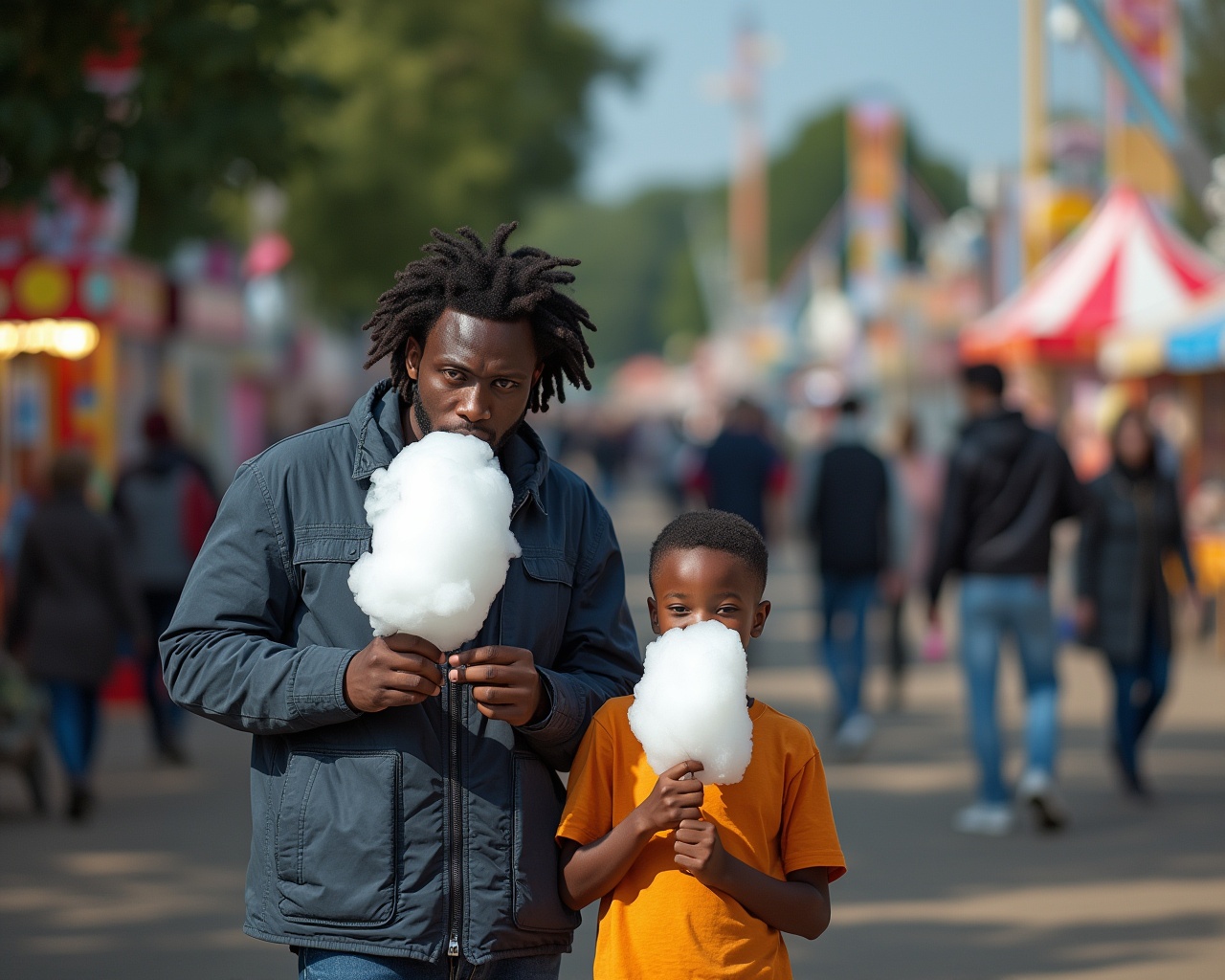
Image Type: Realistic photograph Main Subjects: Two people — a dark-skinned boy aged 7 and his white father, 40 years old with dark hair — both eating from just one white candyfloss at a funfair Scene: It's midday in May and sunny Composition: The two subjects are standing in the middle of the path; no other people are visible in the frame, only a slightly blurred funfair in the background Time and Lighting: Sunny and chilly Shot: Taken from the front using a Nikon Z8

crear una imagen de una mujer elegante y profesional haciendo coaching en una oficina y con un cartel de fondo que dice el nombre de la empresa que es REHZA
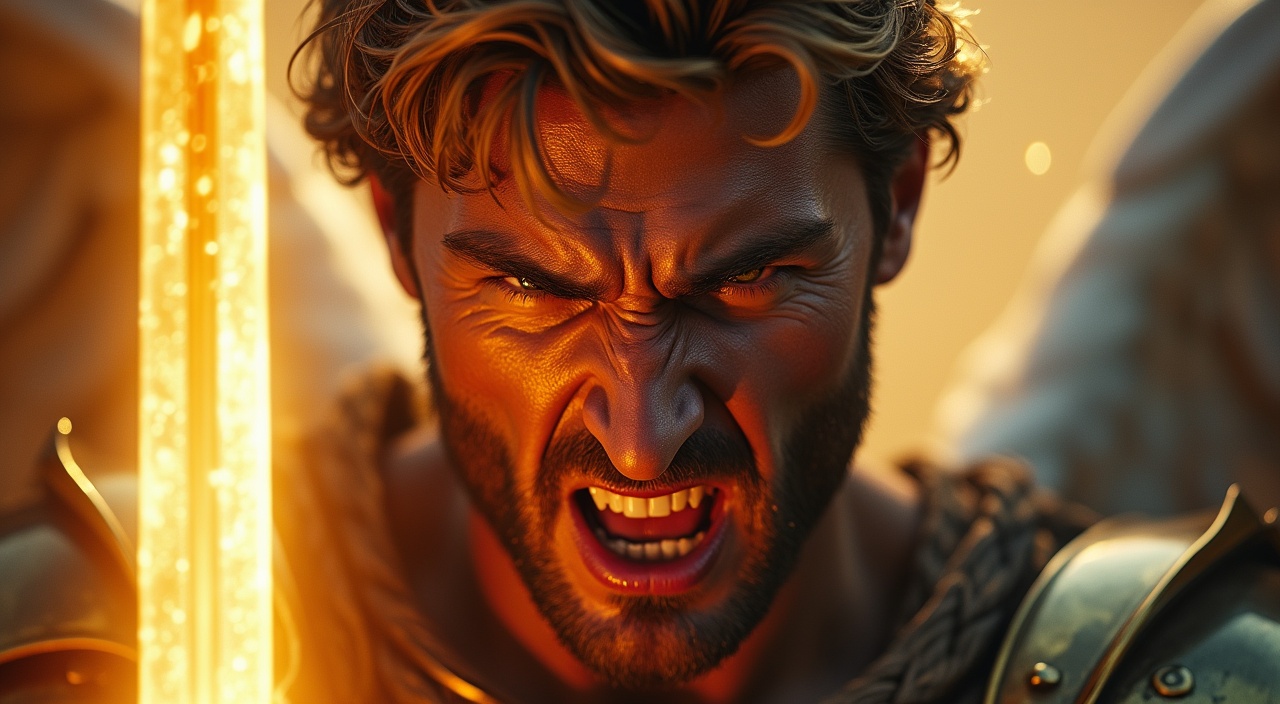
Create a hyper-realistic, cinematic close-up of Archangel Michael’s face in a moment of intense emotion, showing his anger and divine fury. His facial expression is fierce and determined, with furrowed brows and piercing, glowing eyes that radiate both power and righteousness. His jaw is clenched, and his lips are pressed together in a tight, resolute line, conveying a sense of unyielding strength. The light from his radiant sword casts a soft glow on one side of his face, highlighting the sharp angles of his features—strong cheekbones, a chiseled jawline, and an almost divine, ethereal beauty. His armor is visible in the background, subtly reflecting the light, but his focus is entirely on the intensity of the moment. The shadows cast across his face enhance the dramatic effect, with the background fading into a celestial glow. The atmosphere should be one of divine anger and righteousness, as though he is preparing for a righteous confrontation, with an aura of intense light and strength emanating from him.

An elegant autumn-themed promotional image for a lingerie store. A model in a satin nightdress is sitting on a plush armchair near a fireplace, surrounded by warm, cozy elements like a blanket, candles, and autumn leaves. The setting is softly lit with an inviting and luxurious atmosphere, perfect for showcasing lingerie
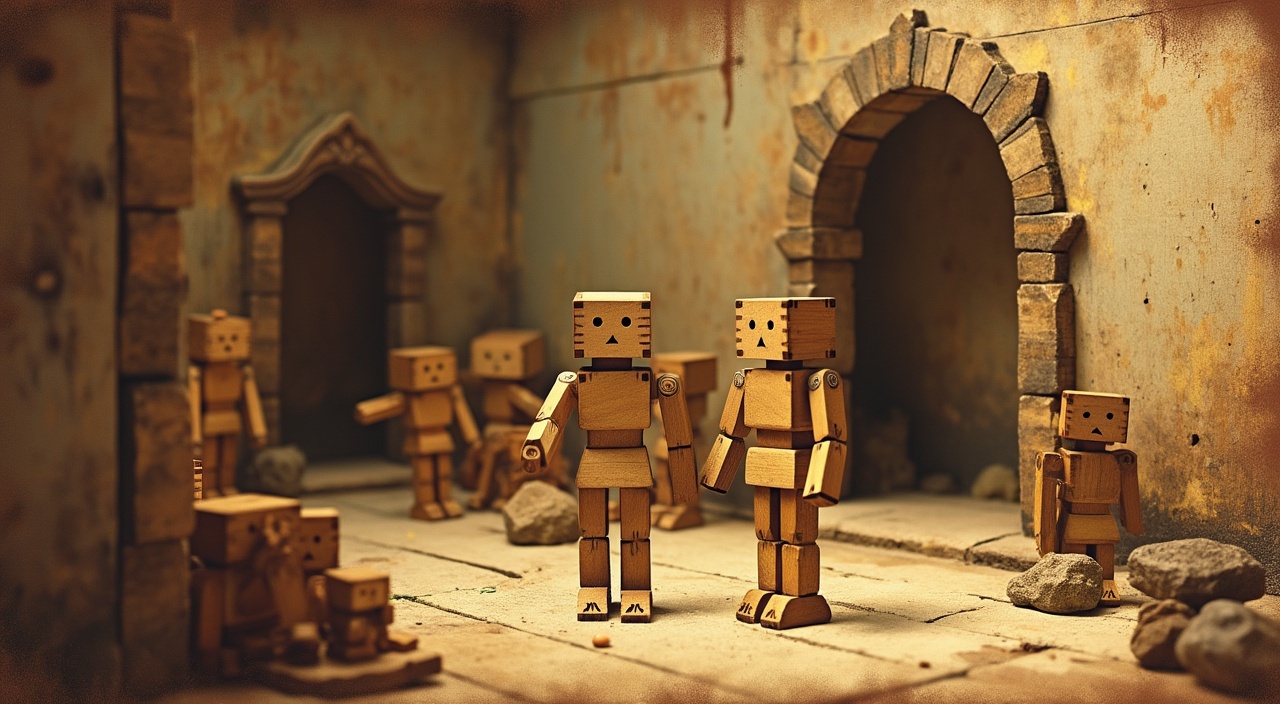
Narrador: "En un rincón de un viejo taller de juguetes, vivía un pequeño soldadito de madera llamado Jesús. Era especial, no por ser el más fuerte ni el más brillante, sino porque tenía un corazón lleno de amor y valentía."
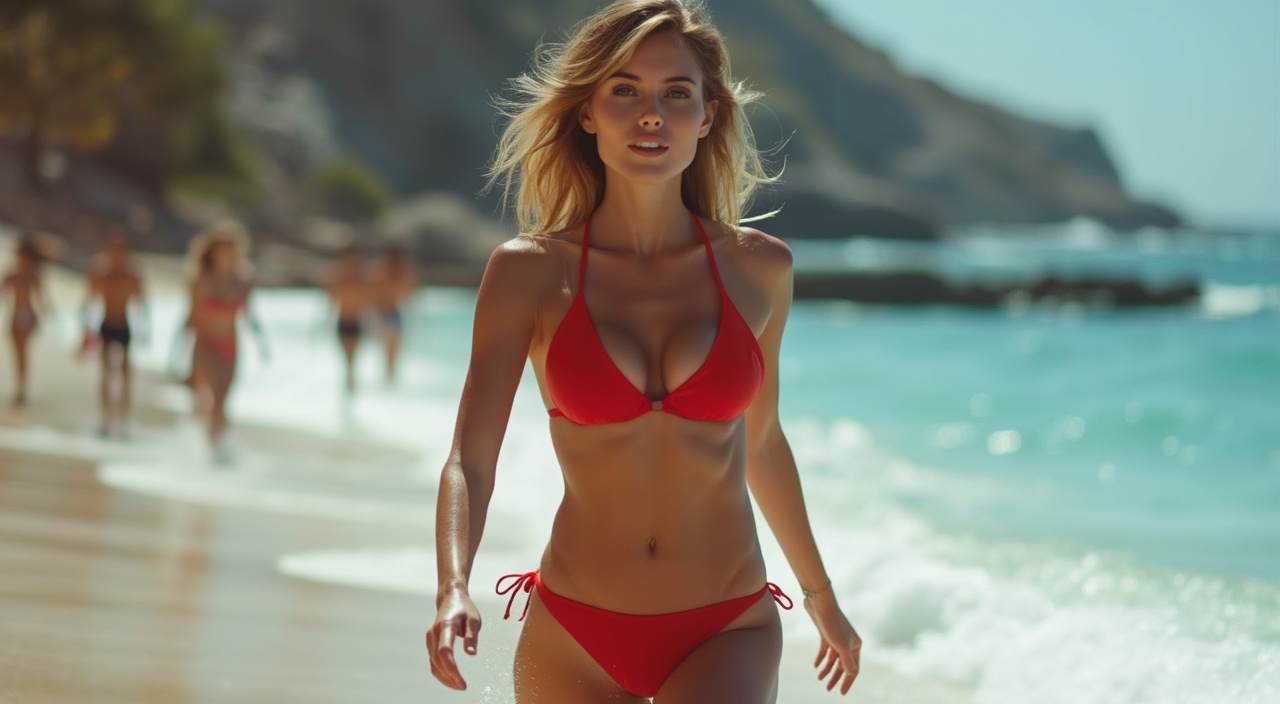
Mujer rubia de cuerpo atlético y senos prominentes caminando en la playa en un día soleado usando un diminuto bikini rojo
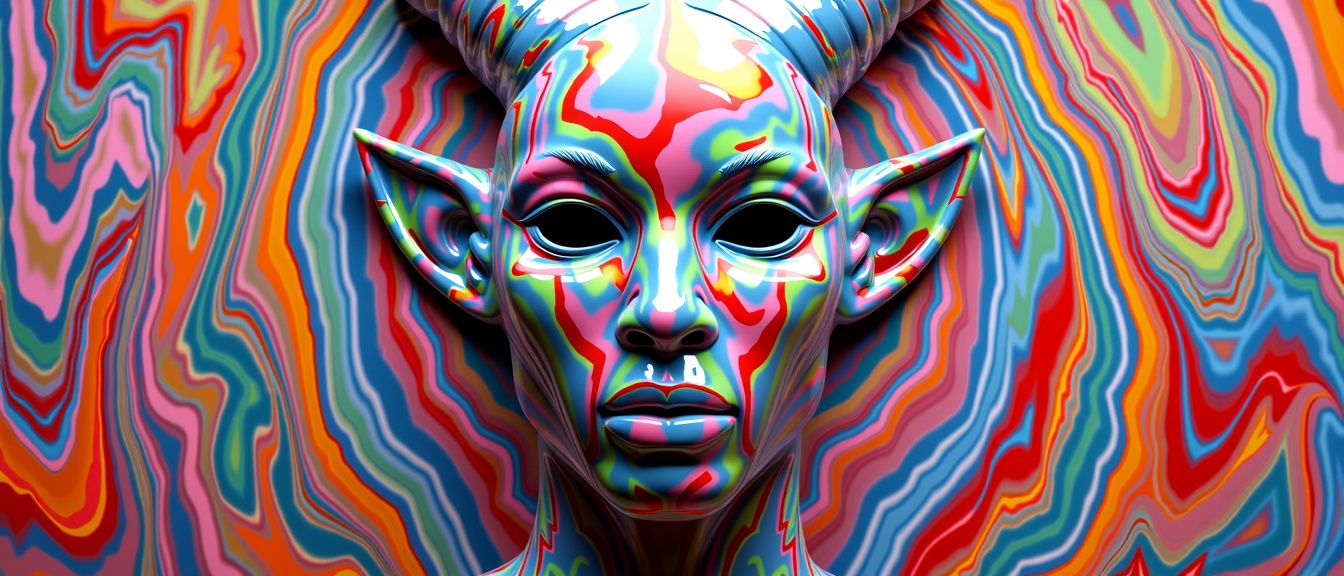
RODIN‐COMPATIBLE PROMPT TRANSLATION Below is a complete, section‐by‐section translation of the 2D abstract painting (a Hornlike/humanoid face with swirling, multi‐colored shapes) into a fully detailed Rodin‐style prompt. All sections are provided in full, with no partial excerpts. 1. Image Decomposition Primary Subject An abstract Hornlike/humanoid face rendered in a swirl of vibrant, multi‐colored regions. Geometric Taxonomy Head Region A “planar mask” shape subdivided into interlocking curved polygons. Dimensions ~1 m tall × ~0.75 m wide. Facial Features Eyes: Two elliptical insets (major axis ~0.15 m, minor axis ~0.09 m). Ears: Slightly pointed triangular outlines at the top corners (~0.2 m edge length). Nose and Mouth: Overlapping convex forms with swirling, curvilinear edges. Background Layered “wave” fields of swirling color patterns, arranged radially around the head. Each wave band ~0.05 m thick. Material Mapping PaintedSurface [Type=Acrylic, Finish=High‐Gloss, Vibrancy=Spectral Range]. Color Layers: Dense swirl with no single base hue, generating a kaleidoscopic spectrum (≥ 80% coverage across R/G/B channels). Pose/Orientation Planar orientation facing forward, with a slight 5° tilt about the vertical axis. Thickness of the artwork ≤ 1 cm along Z, preserving a flat, planar format. 2. Scene Parameterization Optical Properties Reflectance: “Schlick approximation BRDF with 0.65 roughness.” Subsurface Scattering: “1.33 IOR, 2 mm scattering depth” (minimal effect on thin 2D surfaces but included for completeness). 3. Spatial Syntax The hierarchical coordinate structure below specifies all components in Rodin format. Every subsection is fully described: [Root: Abstract_Hornlike_Face_V1 ├─Rotation: (0°, 5°, 0°) ├─Material: PaintedSurface[Type=Acrylic, Finish=High-Gloss] └─Components ├─Ear[Count=2, Shape=Triangular, EdgeLength=0.2m] │ └─Transform: { Position=(TopCorners), Tilt=10° outward } ├─Eye[Count=2, Shape=Ellipse, MajorAxis=0.15m, MinorAxis=0.09m] │ └─ColorRegion: { SwirlPattern, TriplanarUVProjection } ├─Nose_and_Mouth │ └─Contours: { LayeredConvexCurves, # of Swirls=5 } └─Background └─WaveField[BandCount=8, Frequency=variable] └─Blend_Chamfer 0.01m ] 4. Physical Simulation Hints Maintain planar integrity along the Z‐axis Thickness must remain ≤ 1 cm to preserve the 2D artwork format. Avoid self‐collision among adjacent swirl contours The swirling shapes should not intersect or clip through one another. Use OpenCascade analogs Apply “Blend_Chamfer 0.01 m” on polygonal transitions to keep edges smooth. Mapping Strategy Triplanar projection is recommended for the swirling color shapes to distribute high‐frequency color transitions evenly. 5. Complete Technical Prompt “Generate a Hornlike/humanoid planar mask (1 m × 0.75 m) composed of swirling, interlocked polygons in high‐gloss acrylic. Use Schlick BRDF with roughness=0.65. Apply subsurface scattering at 1.33 IOR with a 2 mm scattering depth. Ensure swirl contours do not intersect or collide. Use Blend_Chamfer(0.01 m) to smooth polygonal edges. Render as a 2D plane in 3D space with a 5° tilt about the vertical axis. Apply Gooch shading for a non‐photorealistic style (Tcool=0.6, Twarm=0.8).” Below is a complete Rodin‐style translation for the image, presented in full detail with no omissions: RODIN‐COMPATIBLE PROMPT TRANSLATION 1. Image Decomposition Primary Subject An abstract Hornlike/humanoid face rendered in a swirl of vibrant, multi‐colored regions. Geometric Taxonomy Head Region A “planar mask” subdivided into interlocking curved polygons. Approximately 1 m tall × 0.75 m wide. Facial Features Eyes: Two elliptical insets (major axis ~0.15 m, minor axis ~0.09 m). Ears: Slightly pointed triangular outlines (~0.2 m edge length) positioned at the top corners. Nose and Mouth: Overlapping convex shapes with swirling, curvilinear edges. Background Layered “wave” fields in swirling color patterns, arranged radially around the head. Each band ~0.05 m thick. Material Mapping PaintedSurface [Type=Acrylic, Finish=High‐Gloss, Vibrancy=Spectral Range]. Color Layers: Dense swirl with no single base hue, creating a kaleidoscopic spectrum (≥ 80% coverage across R/G/B channels). Pose/Orientation Planar, front‐facing orientation with ~5° tilt about the vertical axis. Artwork thickness ≤ 1 cm along Z for a relatively flat piece. 2. Scene Parameterization Optical Properties Reflectance: “Schlick approximation BRDF with 0.65 roughness.” Subsurface Scattering: “1.33 IOR, 2 mm scattering depth.” Minimal effect for very thin painted surfaces. 3. Spatial Syntax An example hierarchical Rodin coordinate layout for all elements: [Root: Abstract_Hornlike_Face_V1 ├─Rotation: (0°, 5°, 0°) ├─Material: PaintedSurface[Type=Acrylic, Finish=High-Gloss] └─Components ├─Ear[Count=2, Shape=Triangular, EdgeLength=0.2m] │ └─Transform: { Position=(TopCorners), Tilt=10° outward } ├─Eye[Count=2, Shape=Ellipse, MajorAxis=0.15m, MinorAxis=0.09m] │ └─ColorRegion: { SwirlPattern, TriplanarUVProjection } ├─Nose_and_Mouth │ └─Contours: { LayeredConvexCurves, # of Swirls=5 } └─Background └─WaveField[BandCount=8, Frequency=variable] └─Blend_Chamfer 0.01m ] 4. Physical Simulation Hints Maintain Planar Integrity Keep thickness ≤ 1 cm along the Z‐axis. Avoid Self‐Collision Prevent swirl contours from intersecting or overlapping incorrectly. OpenCascade Analogs Use “Blend_Chamfer 0.01 m” for smoothing polygon transitions. UV Mapping Strategy Triplanar projection is recommended for high‐frequency swirl color transitions. 5. Complete Technical Prompt “Generate a Hornlike/humanoid planar mask (1 m × 0.75 m) with swirling, interlocked polygons in high‐gloss acrylic. Apply Schlick BRDF (roughness=0.65). Use subsurface scattering at 1.33 IOR and 2 mm depth. Prevent collisions in swirl contours. Blend_Chamfer(0.01 m) to smooth edges. Render as a 2D plane in 3D with a 5° tilt about the vertical axis. Non‐photorealistic shading (Gooch), Tcool=0.6, Twarm=0.8.” Rodin-Compatible Text Prompt: Primary Subject: An abstract, cubist-inspired humanoid figure with exaggerated, asymmetrical facial features, including oversized, multi-colored eyes (left eye with concentric red and yellow rings, right eye with cyan and yellow concentric rings), a distorted, angular nose, and an open mouth showing irregular white teeth. The head features pointed, Horn-like ears with dynamic patterns. Attributes: Morphology: Fragmented, overlapping geometric planes with sharp edges and fluid contours creating a distorted human-animal hybrid form. Material Properties: Smooth, high-gloss enamel-like finish with vivid, saturated colors. The surface texture exhibits layered, swirled gradients resembling marbled acrylic paint. Secondary Elements: Foreground: Dominant presence of the figure, occupying central space with high color contrast. Midground: Swirling, flame-like patterns in red, orange, and yellow on the right side, creating a dynamic flow. Background: Vibrant gradient transitioning from cool blue and green hues on the left to warm reds, pinks, and yellows on the right, filled with abstract, wavy lines and swirling motifs. Lighting & Atmosphere: Illumination: Flat, even lighting without clear directional shadows, emphasizing the boldness of colors and sharpness of lines. Atmospheric Effects: High-contrast color transitions and psychedelic, fluidic swirls that create a sense of motion and depth. Color Palette: Dominant Colors: #FF0000 (red), #00FFFF (cyan), #FFFF00 (yellow), #FF00FF (magenta), #008000 (green), #000000 (black), #FFFFFF (white). Harmony: Triadic contrast with bold, saturated primaries and secondaries, creating visual tension and vibrancy. Composition & Perspective: Framing: Tight, central composition focusing on the subject’s upper torso and face. Perspective: Slightly skewed, flattened perspective typical of cubist works, with overlapping planes creating spatial ambiguity. Stylistic Specifications: Medium: Digital vector art with sharp, clean lines and high color saturation. Genre: Neo-Cubist Psychedelic Abstract. Post-Processing: Enhanced color saturation, high-contrast outlines, and smooth gradient blending. Constraints & Exclusions: Exclude photorealistic textures, naturalistic color schemes, or realistic human proportions.

A cute white kitten dressed as a McDonald's employee, wearing a red and white uniform with the McDonald's logo and a matching hat.The cat is standing in a fast-food kitchen, placing the top bun on a burger that has a saucy chicken patty, lettuce, and mayonnaise on the bottom bun. The other half of the bun is nearby on the counter. The kitchen features a stainless steel counter, with stacks of buns and other kitchen equipment in the background. The scene is charming and whimsical, with the cat looking proud of its completed burger
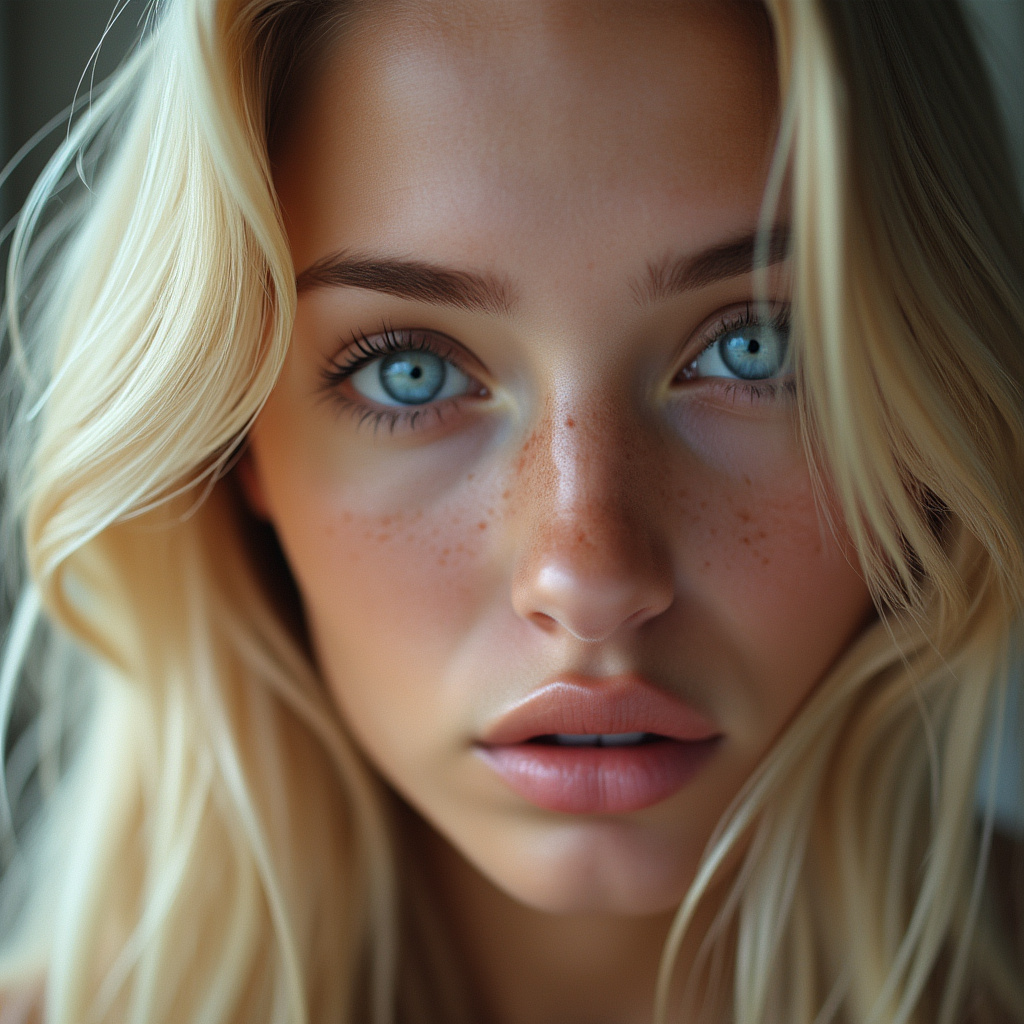
Beautiful blonde hair blue eyes in perfect reality
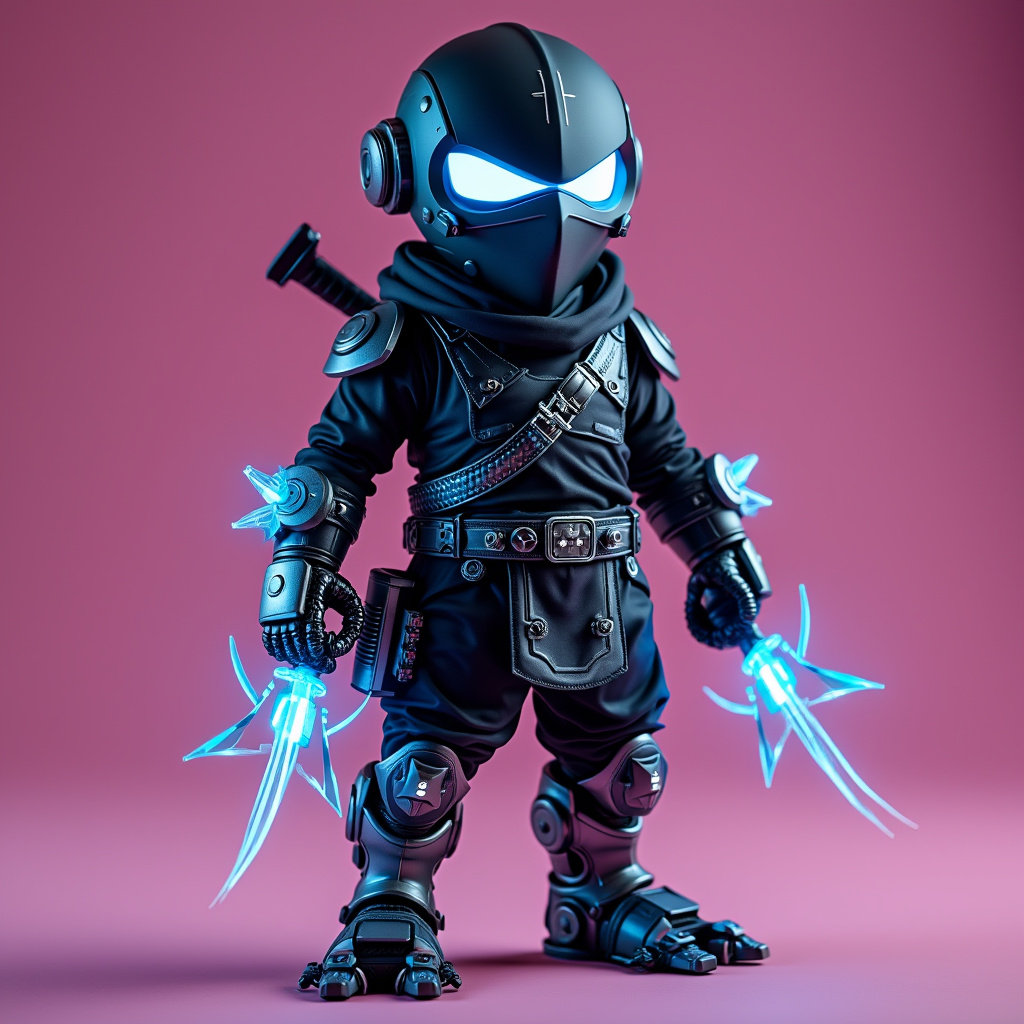
A stylized cyber-ninja/character figure photographed against a solid magenta background. The character has a sleek, angular helmet with a glowing LED visor strip and tactical mask details. The body combines traditional ninja garb with high-tech armor, featuring matte black surfaces with neon blue circuit patterns and energy lines. Mechanical throwing stars attach to various points on the armor. The hands are detailed with carbon fiber textures and glowing energy weapons. The feet feature split-toed tactical boots with mechanical details. Professional lighting emphasizes the contrast between matte and glowing elements.

How to Generate Top-Quality Images with FLUX.1-Pro?
Create unmatched visuals with FLUX.1-Pro by following these steps:
- Enter your text prompt and select your preferred settings using FLUX.1-Pro.
- Press the button to generate the highest quality images with FLUX.1-Pro.
- Repeat the process to explore diverse outputs with FLUX.1-Pro.
Frequently asked questions
What is FLUX.1-Pro used for?
FLUX.1-Pro is the top-tier model for generating state-of-the-art images with unmatched quality, detail, and output diversity, making it the best choice for professional-grade visual content.
How does FLUX.1-Pro compare to other models?
FLUX.1-Pro stands out with its superior prompt following, visual quality, and detailed output. It outperforms other models in delivering high-resolution, diverse images suitable for professional use.
What image quality does FLUX.1-Pro provide?
FLUX.1-Pro provides the highest image quality among FLUX models, with exceptional detail, color accuracy, and sharpness, making it ideal for projects requiring top-tier visual excellence.
Is FLUX.1-Pro free to use for all purposes?
Yes, FLUX.1-Pro is free to use for personal, scientific, and commercial projects, offering the highest quality output without the need for expensive, closed-source alternatives.
What license applies to FLUX.1-Pro images?
FLUX.1-Pro images are released under the Apache-2.0 license, allowing broad use in various fields, including commercial projects, with flexibility for modification and distribution.
Any tips for best results with FLUX.1-Pro?
For optimal results with FLUX.1-Pro, use highly detailed prompts and experiment with various settings to fully utilize its capabilities in producing top-quality, professional-grade images.